
Cyber Insurance Online :: News
SHARE

Share this news item!

New Dust Limits Put Farm Safety Records in the Insurance Spotlight

State-by-state delays mean grain growers should check both compliance duties and risk documentation

New Dust Limits Put Farm Safety Records in the Insurance Spotlight?w=400

The information on this website is general in nature and does not take into account your objectives, financial situation, or needs. Consider seeking personal advice from a licensed adviser before acting on any information.

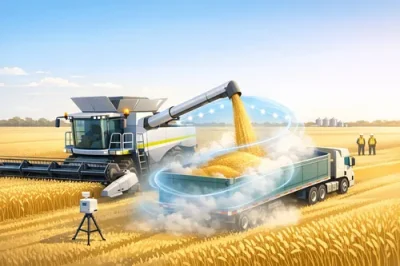
New workplace exposure limits for airborne contaminants are moving from a regulatory issue to a practical farm risk-management concern, particularly for grain growers heading through harvest.
With the national transition scheduled for 1 December 2026, recent state decisions to delay or stage some limits have created a patchwork of obligations that farm businesses should watch closely.

Safe Work Australia’s framework replaces workplace exposure standards with workplace exposure limits for substances that may be present in farm work, including grain dust, phosphine, diesel particulate matter, chemical vapours, welding fumes, mould and smoke. The core duty remains familiar: farm operators must eliminate or minimise risks so far as reasonably practicable and ensure workers are not exposed above the applicable limit. What is changing is the detail of some limits, and for many growers the practical question is how exposure can be measured and documented on a working farm.

The issue has sharpened because implementation is no longer uniform in every respect. SafeWork NSW announced on 28 October 2026 that the new phosphine exposure limit would be delayed until 1 July 2028, with a staged approach for diesel particulate matter. WorkSafe WA has said updated limits will apply from 1 December 2026, while the phosphine limit has been extended to 1 December 2029. Victoria has also provided a three-year transition for 15 substances, including grain dust, phosphine and diesel particulate matter.

Industry concern is strongest around grain dust. Grain Producers Australia has reported high levels of grower uncertainty about measuring and managing the lower grain dust limit, while South East Premium Wheat Growers Association has called for Western Australia to delay the grain dust change until clearer guidance is available. That does not remove the health concern: dust exposure can be a serious long-term worker safety issue, and regulators are clearly focused on prevention rather than waiting for occupational disease claims to emerge years later.

For farm insurance, the point is not that a policy will necessarily pay for compliance work. Safety obligations, penalties and routine risk-control costs are usually separate from the purpose of insurance. The relevance is broader: poor records, unclear contractor arrangements or weak controls can complicate liability questions, workers compensation matters and claims evidence after an incident.

Farm businesses may wish to consider, in general terms:

  • checking which limits and transition dates apply in their state or territory;
  • mapping dusty or enclosed tasks, including loading, augering, cleaning, chemical handling and workshop jobs;
  • recording practical controls such as enclosed cabins, ventilation, maintenance, housekeeping, training and respiratory protection;
  • clarifying responsibilities where contractors, seasonal workers or family labour are involved;
  • keeping evidence of risk assessments, monitoring advice and worker consultation.

The coming months are likely to bring further guidance and lobbying. Until then, the safest reading for farm operators is that airborne contaminant management is becoming a more visible part of farm risk governance, and insurance reviews should sit alongside, not replace, sound workplace safety planning.

Published:Wednesday, 4th Nov 2026
Author: Paige Estritori

Please Note: We do not endorse any specific products or companies. Some content is sourced from third parties, including press releases, and may not be independently verified for accuracy or completeness.

Share this news item:

Rate this article

0 Comments

No comments yet. Be the first to share your thoughts.

Insurance News

New WHS figures sharpen the risk picture for tradies
11 Nov 2026: Paige Estritori
Safe Work Australia’s latest Key Work Health and Safety Statistics, released on 12 October 2026, provide a fresh reminder that construction remains one of the country’s highest-risk work environments. The national data records 41 construction worker fatalities in 2025 and shows construction accounted for 11.7% of serious workers’ compensation claims in 2024-25, making the figures directly relevant to trade businesses reviewing safety systems, contracts and insurance arrangements. - read more
Mallee Hail Is a Sharp Reminder About Harvest-Time Insurance Gaps
10 Nov 2026: Paige Estritori
A damaging hailstorm across Victoria’s Mallee has turned a promising harvest into a difficult insurance and cash-flow test for affected grain growers. ABC Rural reported on 6 November 2026 that hail swept through districts including Birchip, Wycheproof and Quambatook, damaging thousands of hectares of wheat, barley, lentils, canola and other crops just as many paddocks were ready to harvest. - read more
Strata Storm Claim Ruling Puts Defect Exclusions in Focus
10 Nov 2026: Paige Estritori
A recent Australian Financial Complaints Authority decision has highlighted a difficult but common issue for strata communities: damage that happens during a storm is not always insured storm damage. The dispute, reported on 5 November 2026, involved an owners corporation claim for a collapsed parapet wall, with the insurer declining cover on the basis that defective design, materials or workmanship were the dominant cause rather than the weather event itself. - read more
Healthcare liability pressure puts clinic renewal evidence in focus
10 Nov 2026: Paige Estritori
A new Australian healthcare professional liability market update points to a sharper divide between general insurance market conditions and the experience of healthcare organisations arranging malpractice and professional liability cover. Lockton’s 1 November 2026 update says established insurers remain selective, claims inflation is affecting attachment points and underwriters are looking more closely at how clinical governance works in practice, not merely whether accreditation exists. - read more
WA Child Safety Changes Put Fitness Compliance in the Spotlight
10 Nov 2026: Paige Estritori
Western Australia’s updated Working With Children Check laws are a timely reminder that fitness business risk is not limited to physical injury, equipment damage or venue incidents. The changes, in effect from 17 September 2026 and highlighted by AUSactive in October, mean certain adverse Working With Children outcomes from other Australian jurisdictions can now affect a person’s ability to work with children in WA. - read more


Cyber Insurance Articles

10 Common Online Liabilities and How to Mitigate Them
In this digital age, online liabilities have become a crucial concern for individuals and businesses alike. At its core, an online liability refers to the potential risks and responsibilities associated with using the internet. These risks can range from data breaches to financial theft, and they have significant implications in our increasingly connected world. - read more
Understanding Cyber Threats and How They Affect Your Finances
Cyber threats refer to malicious acts that seek to damage data, steal information, or disrupt digital operations. These threats can come in various forms, such as malware, phishing attacks, ransomware, and more. - read more
Cyber Security Essentials: Steps to Secure Your Online Business in Australia
As the digital economy flourishes, Australian businesses are enjoying the fruits of their own cyber-infrastructure but are also becoming increasingly susceptible to cyber threats. The era of the internet has ushered in a wave of new opportunities, yet it also demands vigilance in the face of growing cyber risks. With cyberattacks becoming more sophisticated and frequent, the imperative for robust cyber security measures has never been more pronounced. - read more
Before You Apply for Cyber Insurance: What You’ll Be Asked (and What It Really Means)
Cyber insurance is one of the most valuable business covers available today, but it is also one of the most confusing to apply for. Many business owners expect it to work like other insurance types, where you provide basic details such as turnover, industry, and location, then receive a quote. Cyber insurance is different. It behaves less like a simple application and more like a risk interview. - read more
The Importance of Cyber Risk Management in Modern Business
Cyber risk management involves identifying, assessing, and prioritizing potential risks to an organization's digital assets and implementing measures to mitigate these threats. - read more

Knowledgebase
Beneficiary:
The person or entity designated to receive the death benefit from a life insurance policy.