
Cyber Insurance Online :: News
SHARE

Share this news item!

Harvest Fires Put Mallee Crop Losses in Sharp Relief

Fire-damaged crops raise questions about sums insured, evidence and continuity planning

Harvest Fires Put Mallee Crop Losses in Sharp Relief?w=400

The information on this website is general in nature and does not take into account your objectives, financial situation, or needs. Consider seeking personal advice from a licensed adviser before acting on any information.

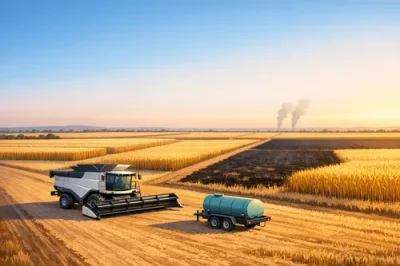
Seven fires across Victoria’s north-west Mallee on Tuesday 10 November have turned harvest-season fire risk into an immediate business issue for grain growers.
ABC Rural reported on 11 November 2026 that the Country Fire Authority estimated about 300 hectares of crops were destroyed, including lentils near Walpeup and barley near Nandaly, with dry lightning and harvest activity among the triggers.

The timing matters. Crops close to harvest can represent months of input costs, seasonal risk and expected income sitting exposed in the paddock. A fire at that stage is not only a production loss; it can affect cash flow, grain contracts, machinery movements, labour plans and next season’s preparation. It also highlights how quickly a local incident can become a regional problem when multiple fires stretch emergency resources.

For insurance purposes, the key lesson is not simply that fire is a covered peril under many rural policies. The practical question is whether the relevant crop insurance section, declared crop values, acreage records, excesses, notification requirements and exclusions match the way the farm is actually operating at harvest. Farmers may also need to consider the boundary between standing crops, harvested grain, machinery, fencing, stored inputs and other property, because different policy sections can respond differently.

  • Keep paddock maps, crop type records and expected yield estimates up to date.
  • Record photos or drone footage before and after damage where it is safe to do so.
  • Document firefighting costs, contractor delays and clean-up work separately.
  • Check whether machinery, fencing, hay, fuel and stored grain sit under separate limits.

The CFA’s separate fire danger period updates this week also point to a wider seasonal issue: strong spring growth can create heavy fuel loads that dry quickly as warmer weather arrives. That makes natural disaster preparation more than a pre-summer checklist. Firebreaks, header maintenance, local communications, water access and neighbour response plans can all influence whether a small ignition remains manageable or spreads into a larger loss.

No policy can remove the frustration of losing a strong crop days before harvest, and insurance outcomes will depend on individual wording and evidence. However, these Mallee fires are a timely reminder that renewal conversations should include harvest-stage exposures, not just buildings and machinery. For mixed and broadacre farms, the most useful review is often the one that traces how value moves across the season: from growing crop, to harvested grain, to stored produce and then to sale.

Published:Thursday, 12th Nov 2026
Author: Paige Estritori

Please Note: We do not endorse any specific products or companies. Some content is sourced from third parties, including press releases, and may not be independently verified for accuracy or completeness.

Share this news item:

Rate this article

0 Comments

No comments yet. Be the first to share your thoughts.

Insurance News

New Stallholder Cover Puts Market Liability Back on the Agenda
25 Nov 2026: Paige Estritori
Market Lane Insurance Agencies’ expanded Lloyd’s-backed product range has added another option for eligible Australian stallholders, with its Gateway platform now offering annual public and products liability cover for market traders. The development is timely as summer markets, school fetes, local shows and food events increase the number of small operators selling in public spaces. - read more
ASIC Complaint Data Puts Premium and Claims Friction in View
24 Nov 2026: Paige Estritori
ASIC’s latest internal dispute resolution data has given Australians a sharper view of where friction is occurring inside the general insurance market, with newly refreshed dashboard information showing very large complaint volumes across motor, home and contents cover. The figures do not prove that every complaint was upheld, or that one insurer is automatically worse than another, but they do make complaint patterns easier to see and harder for the industry to ignore. - read more
NSW Safety Code Changes Put Trainer Risk Systems Under Scrutiny
24 Nov 2026: Paige Estritori
NSW fitness operators have been given a timely reminder that workplace safety Codes of Practice are no longer just background guidance. AUSactive has highlighted that, from 1 July 2026, NSW health and fitness businesses must either comply with relevant approved WHS Codes of Practice or manage risks in a way that achieves an equivalent or higher safety standard. - read more
New Cyber Cost Data Gives Freelancers a Practical Risk Signal
24 Nov 2026: Paige Estritori
Australia’s latest cyber threat reporting has put a clearer price tag on a risk many freelancers still treat as secondary: the cost of a digital incident. The Australian Signals Directorate’s 2025-26 Annual Cyber Threat Report recorded more than 82,000 cybercrime reports, while the average self-reported cost was $55,400 for small businesses and $141,300 for medium businesses. - read more
Parametric Delay Cover Puts Weather Risk Under the Microscope
24 Nov 2026: Paige Estritori
A newly reported parametric construction delay structure has put a practical spotlight on a familiar problem for Australian builders: weather can stop work, burn through contingency and trigger contractual pressure even when there is no physical damage for a conventional insurance policy to address. - read more


Cyber Insurance Articles

Understanding Cyber Threats and How They Affect Your Finances
Cyber threats refer to malicious acts that seek to damage data, steal information, or disrupt digital operations. These threats can come in various forms, such as malware, phishing attacks, ransomware, and more. - read more
The Essential Guide to Cyber Insurance for Australian Businesses
Cyber insurance is a type of insurance designed to protect businesses from internet-based risks and, more generally, from risks relating to information technology infrastructure and activities. It covers losses related to data breaches, cyber extortion, and other kinds of cyber attacks. - read more
How claims-made cyber insurance policies work
Many cyber insurance policies operate on a claims-made basis, which means timing can affect whether a cyber incident is covered. This guide explains policy periods, notification, retroactive dates, known circumstances and continuity of cover for Australian businesses reviewing cyber insurance wording. - read more
The Importance of Cyber Risk Management in Modern Business
Cyber risk management involves identifying, assessing, and prioritizing potential risks to an organization's digital assets and implementing measures to mitigate these threats. - read more
10 Common Online Liabilities and How to Mitigate Them
In this digital age, online liabilities have become a crucial concern for individuals and businesses alike. At its core, an online liability refers to the potential risks and responsibilities associated with using the internet. These risks can range from data breaches to financial theft, and they have significant implications in our increasingly connected world. - read more

Knowledgebase
Aggregate Limit:
The maximum amount an insurer will pay for all covered losses during a policy period.