
Cyber Insurance Online :: News
SHARE

Share this news item!

NSW Emergency Levy Reform Puts Retail Premiums Back in Focus

Paige Estritori explains why the committee’s report matters for shop owners reviewing premiums, leases and renewal budgets.

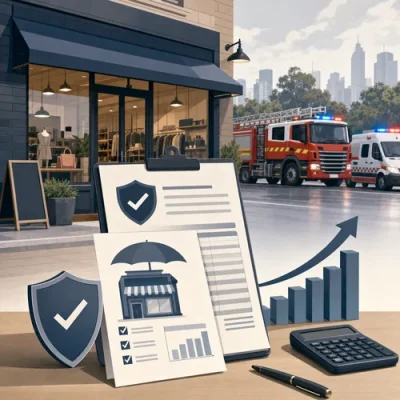
NSW Emergency Levy Reform Puts Retail Premiums Back in Focus?w=400

The information on this website is general in nature and does not take into account your objectives, financial situation, or needs. Consider seeking personal advice from a licensed adviser before acting on any information.

A New South Wales parliamentary committee has tabled a fresh report recommending that the state replace its insurance-based Emergency Services Levy with a broader funding model for emergency services.
For retailers, cafés, convenience stores and other shopfront businesses, the development is important because the levy is currently embedded in many insurance costs, but any replacement system could shift expenses rather than simply remove them.

The committee’s report, tabled on 18 November 2026, recommends that the next NSW Parliament adopt a new funding source that is equitable, efficient, simple and sustainable. It also recommends decoupling emergency services funding from insurance premiums and making Revenue NSW responsible for collecting and administering any replacement levy. That is a significant policy signal, but it is not yet legislation. The government response is due in May 2027, and the final design, timing and transition rules remain unresolved.

The current levy has long been criticised by insurers and business groups because it increases the cost of taking out insurance. The report notes that the levy adds to the base premium and then affects the amount on which other taxes are calculated. For insured businesses, that can make insurance feel more expensive at exactly the point where owners are trying to manage weather, fire, theft, liability and interruption risks. This is why the broader debate about insurance taxes remains relevant to small retailers.

However, shop owners should be cautious about assuming that reform would automatically reduce total business costs. A property-based levy may be collected differently and could appear through rates, landlord outgoings or commercial property charges, depending on the final model and lease arrangements. The committee also acknowledged concerns that commercial, industrial and agricultural property owners should not be adversely affected by a replacement levy.

For tenants, the practical issue is not only the premium line on an insurance schedule. Lease clauses may allow landlords to recover government charges, building insurance, emergency services costs or statutory outgoings. A lower insurance premium could be offset by a separate property-related charge if the replacement levy is passed through under a lease.

Retailers reviewing renewals should consider:

  • whether the Emergency Services Levy is shown separately on insurance invoices or bundled into the premium;
  • how lease outgoings are defined and whether new statutory charges may be recoverable;
  • whether sums insured for stock, fit-out, glass and business interruption still reflect current replacement costs;
  • how any premium change affects overall shop insurance cost, rather than focusing on one tax component alone.

The reform process is worth watching because it could improve transparency and affordability over time. For now, the safest interpretation is that NSW has moved closer to changing how emergency services are funded, but shop owners should wait for the final legislation before building savings into budgets.

Published:Thursday, 19th Nov 2026
Author: Paige Estritori

Please Note: We do not endorse any specific products or companies. Some content is sourced from third parties, including press releases, and may not be independently verified for accuracy or completeness.

Share this news item:

Rate this article

0 Comments

No comments yet. Be the first to share your thoughts.

Insurance News

New Stallholder Cover Puts Market Liability Back on the Agenda
25 Nov 2026: Paige Estritori
Market Lane Insurance Agencies’ expanded Lloyd’s-backed product range has added another option for eligible Australian stallholders, with its Gateway platform now offering annual public and products liability cover for market traders. The development is timely as summer markets, school fetes, local shows and food events increase the number of small operators selling in public spaces. - read more
ASIC Complaint Data Puts Premium and Claims Friction in View
24 Nov 2026: Paige Estritori
ASIC’s latest internal dispute resolution data has given Australians a sharper view of where friction is occurring inside the general insurance market, with newly refreshed dashboard information showing very large complaint volumes across motor, home and contents cover. The figures do not prove that every complaint was upheld, or that one insurer is automatically worse than another, but they do make complaint patterns easier to see and harder for the industry to ignore. - read more
NSW Safety Code Changes Put Trainer Risk Systems Under Scrutiny
24 Nov 2026: Paige Estritori
NSW fitness operators have been given a timely reminder that workplace safety Codes of Practice are no longer just background guidance. AUSactive has highlighted that, from 1 July 2026, NSW health and fitness businesses must either comply with relevant approved WHS Codes of Practice or manage risks in a way that achieves an equivalent or higher safety standard. - read more
New Cyber Cost Data Gives Freelancers a Practical Risk Signal
24 Nov 2026: Paige Estritori
Australia’s latest cyber threat reporting has put a clearer price tag on a risk many freelancers still treat as secondary: the cost of a digital incident. The Australian Signals Directorate’s 2025-26 Annual Cyber Threat Report recorded more than 82,000 cybercrime reports, while the average self-reported cost was $55,400 for small businesses and $141,300 for medium businesses. - read more
Parametric Delay Cover Puts Weather Risk Under the Microscope
24 Nov 2026: Paige Estritori
A newly reported parametric construction delay structure has put a practical spotlight on a familiar problem for Australian builders: weather can stop work, burn through contingency and trigger contractual pressure even when there is no physical damage for a conventional insurance policy to address. - read more


Cyber Insurance Articles

Best Practices for Securing Your Small Business in the Digital Age
Cybersecurity refers to the measures and practices put in place to protect digital information and systems from attacks, unauthorized access, damage, and disruption. - read more
Protecting Your Business from Online Threats: The Benefits of Cyber Insurance
In today's digital age, businesses are increasingly becoming more vulnerable to online threats. Cyber attacks are not just limited to large corporations. Small businesses are also at risk and can suffer severe financial losses due to cyber threats. It is essential for small businesses to invest in cyber insurance. Cyber insurance offers protection against online threats, providing financial assistance if a company experiences a data breach, cyber attack, or other forms of cybercrime. - read more
Cyber Insurance Claims: What Small Business Owners Need to Know
Cybersecurity incidents are a growing concern for small businesses. These incidents can have disastrous consequences on the affected businesses and their customers. Cyber insurance policies provide a form of financial protection for small businesses in the event of a cyber-attack. This article will provide an overview of cyber insurance claims and its importance for small business owners. - read more
Cyber Insurance: Safeguarding Your Business Assets and Reputation in the Digital Age
Cyber Insurance is a type of insurance policy that protects businesses against internet-based risks and threats. This policy covers damages and losses caused by cyber attacks, such as theft of customer information, network downtime, and damage to reputation. - read more
Cyber Security Essentials: Steps to Secure Your Online Business in Australia
As the digital economy flourishes, Australian businesses are enjoying the fruits of their own cyber-infrastructure but are also becoming increasingly susceptible to cyber threats. The era of the internet has ushered in a wave of new opportunities, yet it also demands vigilance in the face of growing cyber risks. With cyberattacks becoming more sophisticated and frequent, the imperative for robust cyber security measures has never been more pronounced. - read more

Knowledgebase
Double Indemnity:
A clause or provision in a life insurance policy that doubles the payout in cases of accidental death.