
Cyber Insurance Online :: News
SHARE

Share this news item!

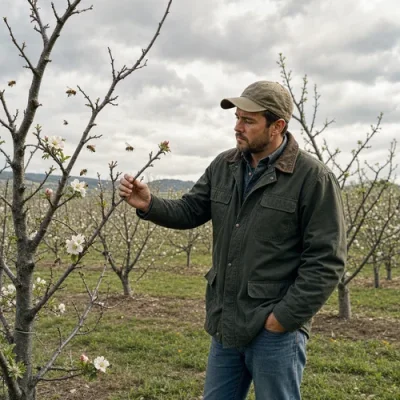
Bare Apple Trees Put Pollination Risk on the Farm Insurance Radar

NSW growers’ low fruit set shows why crop losses are not always a simple insured event

Bare Apple Trees Put Pollination Risk on the Farm Insurance Radar?w=400

The information on this website is general in nature and does not take into account your objectives, financial situation, or needs. Consider seeking personal advice from a licensed adviser before acting on any information.

Reports of unusually low apple yields in parts of New South Wales have turned pollination from a production concern into a broader farm risk issue.
ABC Rural reported on 18 November 2026 that apple growers around Bilpin and Orange are dealing with sparse fruit set despite strong blossom and, in some cases, extra managed hives brought in to support pollination.

Growers suspect reduced feral bee numbers after the Varroa mite response may be one factor, but the cause is not settled. NSW authorities have cautioned that Varroa cannot yet be blamed definitively, with weather during flowering, varietal behaviour, chilling requirements and thinning practices also possible contributors. That uncertainty matters for insurance because a poor crop outcome does not automatically translate into a straightforward claim under crop insurance.

For orchardists, the practical exposure is wider than tonnes of fruit lost. A weak crop can affect supply contracts, seasonal labour planning, cool-room use, packing arrangements and cashflow. In areas where pick-your-own fruit is part of the business model, fewer apples can also reduce visitor trade, farm-gate sales and associated tourism income. Those elements may sit across different policy sections, or may not be covered at all, depending on the wording.

The insurance lesson is not that every pollination failure can be insured against. Many farm policies are built around specified events such as fire, hail, storm or accidental damage, while biological, seasonal or gradual production shortfalls can be treated differently. Growers may need to look closely at what triggers cover, how loss is measured, what exclusions apply and whether any business interruption section depends on physical damage from an insured event.

The latest reports also underline the value of records. Flowering dates, hive placement, hive numbers, bee activity, weather conditions, spray timing, thinning decisions, agronomist notes and yield estimates can all help explain what happened if a loss is being assessed, a contract is being reviewed or future cover is being discussed. For perennial crops, comparing several seasons of records may be more useful than relying on one difficult year.

More broadly, pollination risk is becoming part of the same planning conversation as pests, weather volatility and labour availability. As NSW research continues, farm operators may wish to review pollination agreements, biosecurity procedures, enterprise budgets and farm insurance policies together, rather than treating bees, crops and income protection as separate issues.

Published:Thursday, 19th Nov 2026
Author: Paige Estritori

Please Note: We do not endorse any specific products or companies. Some content is sourced from third parties, including press releases, and may not be independently verified for accuracy or completeness.

Share this news item:

Rate this article

0 Comments

No comments yet. Be the first to share your thoughts.

Insurance News

New Stallholder Cover Puts Market Liability Back on the Agenda
25 Nov 2026: Paige Estritori
Market Lane Insurance Agencies’ expanded Lloyd’s-backed product range has added another option for eligible Australian stallholders, with its Gateway platform now offering annual public and products liability cover for market traders. The development is timely as summer markets, school fetes, local shows and food events increase the number of small operators selling in public spaces. - read more
ASIC Complaint Data Puts Premium and Claims Friction in View
24 Nov 2026: Paige Estritori
ASIC’s latest internal dispute resolution data has given Australians a sharper view of where friction is occurring inside the general insurance market, with newly refreshed dashboard information showing very large complaint volumes across motor, home and contents cover. The figures do not prove that every complaint was upheld, or that one insurer is automatically worse than another, but they do make complaint patterns easier to see and harder for the industry to ignore. - read more
NSW Safety Code Changes Put Trainer Risk Systems Under Scrutiny
24 Nov 2026: Paige Estritori
NSW fitness operators have been given a timely reminder that workplace safety Codes of Practice are no longer just background guidance. AUSactive has highlighted that, from 1 July 2026, NSW health and fitness businesses must either comply with relevant approved WHS Codes of Practice or manage risks in a way that achieves an equivalent or higher safety standard. - read more
New Cyber Cost Data Gives Freelancers a Practical Risk Signal
24 Nov 2026: Paige Estritori
Australia’s latest cyber threat reporting has put a clearer price tag on a risk many freelancers still treat as secondary: the cost of a digital incident. The Australian Signals Directorate’s 2025-26 Annual Cyber Threat Report recorded more than 82,000 cybercrime reports, while the average self-reported cost was $55,400 for small businesses and $141,300 for medium businesses. - read more
Parametric Delay Cover Puts Weather Risk Under the Microscope
24 Nov 2026: Paige Estritori
A newly reported parametric construction delay structure has put a practical spotlight on a familiar problem for Australian builders: weather can stop work, burn through contingency and trigger contractual pressure even when there is no physical damage for a conventional insurance policy to address. - read more


Cyber Insurance Articles

The Importance of Cyber Risk Management in Modern Business
Cyber risk management involves identifying, assessing, and prioritizing potential risks to an organization's digital assets and implementing measures to mitigate these threats. - read more
Case Studies: The True Impact of Cyber Attacks on Australian Small Businesses
As we delve into the digital era, the number of cyber threats that challenge Australian small businesses is significantly on the rise. Cyber attacks have become more sophisticated, frequent, and continue to disrupt the operations of small enterprises, often with devastating consequences. The need to fortify defenses against such threats has never been more paramount. - read more
Understanding Cyber Threats and How They Affect Your Finances
Cyber threats refer to malicious acts that seek to damage data, steal information, or disrupt digital operations. These threats can come in various forms, such as malware, phishing attacks, ransomware, and more. - read more
Protecting Sensitive Data: Cyber Threat Prevention for Remote Teams
Remote work has seen a significant rise in Australia, especially following the COVID-19 pandemic. More businesses are embracing flexibility, allowing employees to work from home or other remote locations. - read more
The Essential Guide to Cyber Insurance for Australian Businesses
Cyber insurance is a type of insurance designed to protect businesses from internet-based risks and, more generally, from risks relating to information technology infrastructure and activities. It covers losses related to data breaches, cyber extortion, and other kinds of cyber attacks. - read more

Knowledgebase
Insurance broker:
An agent acting on behalf of the insured (not the insurance company) who negotiates the terms and cover provided by the insurer in the insurance policy.