

Cyber Insurance Online :: News
SHARE

Share this news item!

Why Battery Fire Risk Belongs on the Salon Insurance Checklist

Charging habits, equipment storage and documentation can all affect how well a beauty business is prepared

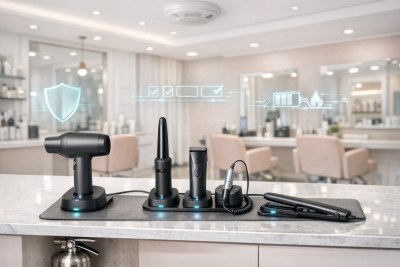
Why Battery Fire Risk Belongs on the Salon Insurance Checklist?w=400

The information on this website is general in nature and does not take into account your objectives, financial situation, or needs. Consider seeking personal advice from a licensed adviser before acting on any information.

Recent Australian insurance and small business risk commentary has again highlighted lithium-ion battery fires as a practical hazard for workplaces that rely on rechargeable equipment.
For beauty salons, skin clinics, nail studios and mobile beauticians, the issue is not limited to obvious items such as laptops or phones.
Many everyday tools, including cordless clippers, LED devices, payment terminals, tablets, portable speakers, torches and cleaning equipment, may depend on rechargeable batteries.

The risk for beauty businesses is twofold. First, a battery failure can create a sudden fire or smoke event that damages fit-out, stock, electronics and client areas. Secondly, even a contained incident can interrupt trading if the premises needs cleaning, electrical checks, replacement equipment or landlord approval before reopening. That makes battery safety relevant to contents cover, business interruption, lease obligations and broader risk management.

Insurers are increasingly interested in whether businesses can show sensible controls, not just whether a policy exists. For a salon, that may mean charging devices on non-flammable surfaces, avoiding overnight charging where possible, removing damaged batteries from service, using manufacturer-approved chargers, keeping heat sources away from charging areas and ensuring staff know what to do if a device swells, overheats or smells unusual.

Mobile beauticians face an additional layer of exposure because equipment is transported, charged in different locations and sometimes stored in vehicles between appointments. A battery damaged in transit may not show signs immediately, so it is worth checking cases, cords and devices as part of the normal setup and pack-down routine. If a tool is essential to daily income, its replacement value and downtime impact should also be considered.

The insurance takeaway is not to panic, but to update the risk picture. Salon owners should review whether their policy limits reflect current equipment, electronics, retail stock and fit-out values, and whether business interruption settings would be enough after a fire, smoke or electrical incident. Keeping purchase records, maintenance notes and photos of higher-value equipment can also help if a claim needs to be assessed.

This is also a useful prompt to revisit fire safety procedures, staff training and landlord requirements. Battery incidents may be small at first, but the resulting property damage and lost trading time can be significant for a service business with bookings, casual staff and regular clients.

As battery-powered devices become more common in beauty work, practical prevention and accurate sums insured should move together. If your equipment list has grown, your treatment mix has changed or you have added mobile services, take time to estimate practical insurance levels before your next renewal discussion.

Published:Wednesday, 2nd Sep 2026
Author: Paige Estritori

Please Note: We do not endorse any specific products or companies. Some content is sourced from third parties, including press releases, and may not be independently verified for accuracy or completeness.

Share this news item:

Rate this article

0 Comments

No comments yet. Be the first to share your thoughts.

Insurance News

Why Battery Fire Risk Belongs on the Salon Insurance Checklist
02 Sep 2026: Paige Estritori
Recent Australian insurance and small business risk commentary has again highlighted lithium-ion battery fires as a practical hazard for workplaces that rely on rechargeable equipment. For beauty salons, skin clinics, nail studios and mobile beauticians, the issue is not limited to obvious items such as laptops or phones. Many everyday tools, including cordless clippers, LED devices, payment terminals, tablets, portable speakers, torches and cleaning equipment, may depend on rechargeable batteries. - read more
Why Insurance Affordability Remains a Practical Issue for Tradies
02 Sep 2026: Paige Estritori
Recent insurance industry commentary has again highlighted the affordability challenge facing Australian policyholders, with premium pressure linked to natural hazard exposure, higher repair costs, reinsurance conditions, claims inflation and state-based charges. While much of the public debate focuses on households, the same forces can flow through to small trade businesses that rely on public liability, tools, vehicles, workshop contents and income-related cover to keep operating. - read more
What the Latest Cyclone Pool Signals Mean for Strata Renewals
02 Sep 2026: Paige Estritori
The latest industry attention on Australia’s Cyclone Reinsurance Pool is a useful reminder that affordability reform is only one part of the strata insurance equation. The pool was designed to reduce the cost pressure created by cyclone risk, particularly across northern Australia, where residential strata schemes can face difficult renewal conditions because of wind, rain, storm surge and ageing building infrastructure. - read more
Cyclone Insurance Review Puts Northern Tradie Risks in Focus
02 Sep 2026: Paige Estritori
A fresh review of Australia’s cyclone reinsurance pool has put insurance access and affordability back in the spotlight for communities and small businesses across northern Australia. The pool was designed to reduce pressure on premiums for cyclone and cyclone-related flood damage by giving insurers access to government-backed reinsurance. - read more
Automation Is Changing Life Cover Decisions
02 Sep 2026: Paige Estritori
Recent industry reporting has put renewed attention on how artificial intelligence and automated decision-making are being used across insurance. For life insurance customers, the issue is not whether technology is good or bad. It is whether faster systems are being used in ways that remain fair, explainable and properly supervised. - read more


Cyber Insurance Articles

How cyber business interruption cover works
Cyber business interruption cover may help an Australian business manage income loss and extra costs when a covered cyber incident disrupts normal operations. This guide explains common triggers, limits, waiting periods, dependent service provider issues and claim preparation. - read more
Data breach notification obligations for Australian businesses
Australian businesses that experience a data breach may need to assess whether the Notifiable Data Breaches scheme applies, notify the OAIC and affected individuals, report cybercrime through ReportCyber, and carefully document their response. This guide explains the key notification and reporting steps in general terms, and how cyber insurance may support breach response planning. - read more
The Importance of Cyber Risk Management in Modern Business
Cyber risk management involves identifying, assessing, and prioritizing potential risks to an organization's digital assets and implementing measures to mitigate these threats. - read more
Best Practices for Securing Your Small Business in the Digital Age
Cybersecurity refers to the measures and practices put in place to protect digital information and systems from attacks, unauthorized access, damage, and disruption. - read more
Understanding the Cost of Cyber Attacks on Small Businesses and How to Avoid Them
Cybersecurity refers to the practice of protecting systems, networks, and programs from digital attacks. These cyber attacks are usually aimed at accessing, changing, or destroying sensitive information, extorting money from users, or interrupting normal business processes. - read more

Knowledgebase
Insurance Underwriter:
An insurance company, a financial institution that sells insurance.